
Written by the Stone Restore Solutions team in Grove, Oklahoma. Published · last reviewed for accuracy .
Heat near the range
Natural stone — granite and quartzite in particular — tolerates hot cookware better than engineered quartz. If someone in your house habitually sets a pan straight down, that is a real argument for natural stone.
Quartz is entirely usable next to a range; it just wants a trivet, because the resin in it is the part that reacts to sustained heat.
Stains, spills and porosity
Quartz is non-porous, which is why it shrugs off wine, coffee and oil with a wipe. Granite, quartzite and marble are porous to varying degrees; sealing slows absorption, and wiping spills up rather than leaving them is what actually prevents most staining.
Marble is the most reactive of the four: acidic spills can dull the surface even when they do not stain it.
Islands, seams and overhangs
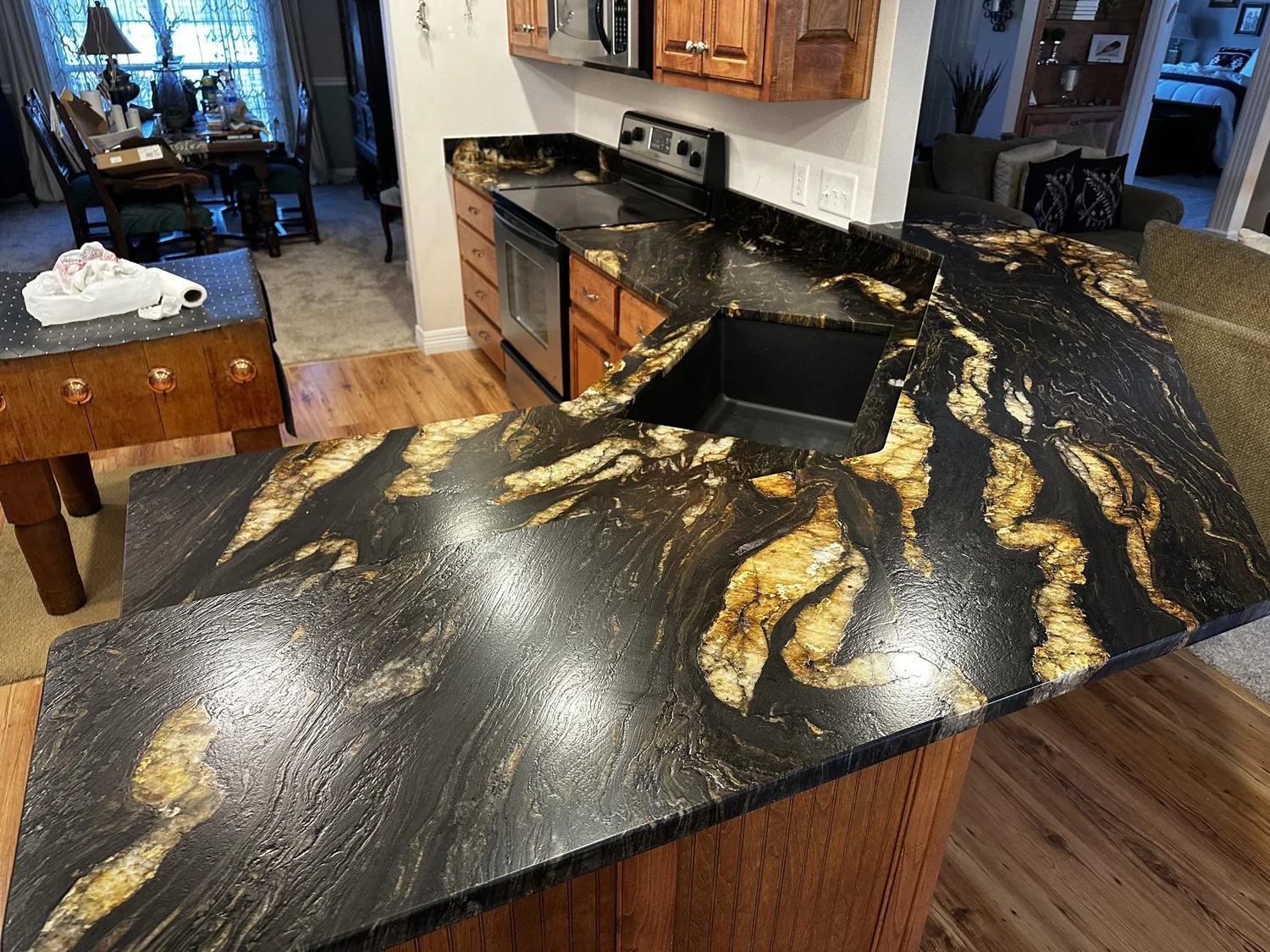
Slab size sets the rules. A large island may need a seam, and where that seam falls — and how the pattern carries across it — is a layout decision we make with you at the slab rather than an afterthought.
Seating overhangs need support appropriate to the material and the span. We work that out during templating, when we can see the cabinet run as built.
Sinks, cooktops and edges
Undermount sinks, farmhouse sinks and drop-in cooktops all change how a top is cut, and cutouts are done in our shop where the slab is supported properly.
Edge treatment is partly aesthetic and partly practical: a softer profile is more forgiving at a busy corner. Bring your cabinet door and hardware to the showroom and we will look at edges against them.
The short version
Want the least thinking about care? Quartz. Want natural stone that takes abuse? Granite or quartzite. Want the marble look with more resilience? Quartzite. Want marble, knowingly? Marble.