
Stone Finder
Granite, quartz, quartzite or marble?
Four materials, four different temperaments. This is the same comparison we walk customers through at the showroom — practical, honest, and without the absolute claims you see elsewhere.
Natural stone varies slab to slab, and outdoor suitability depends on the material, its finish and the exposure. So treat this as a starting point, then let us look at the actual slab with you.
Start with the project
Pick the closest description and we will point you at the materials we would look at first. Nothing here is a rule — it is where the conversation usually starts.
Natural stone
Granite
Quarried natural stone with a wide range of movement, from near-uniform speckle to bold veining. No two slabs match.
Engineered surface
Quartz
Natural quartz bound with resin and pigment, made to a consistent pattern so slabs match each other closely.
Natural stone
Quartzite
Natural stone that often reads like marble but is generally harder. Material sold as quartzite varies, so we check the individual slab with you.
Natural stone
Marble
Classic soft-toned veining and a cool surface. A calcite stone, so it responds to acids and wears differently than granite or quartz.
Side by side
Natural stone varies from slab to slab, so treat this as guidance for the material class rather than a promise about one particular piece.
Appearance & variationHow much will it vary from the sample I saw?
- Granite
- Every slab is unique — speckled, flowing or dramatic depending on the stone. Choose from the actual slab, not a small sample.
- Quartz
- Highly consistent. Patterns are designed and repeat, which makes matching a second piece or a future addition realistic.
- Quartzite
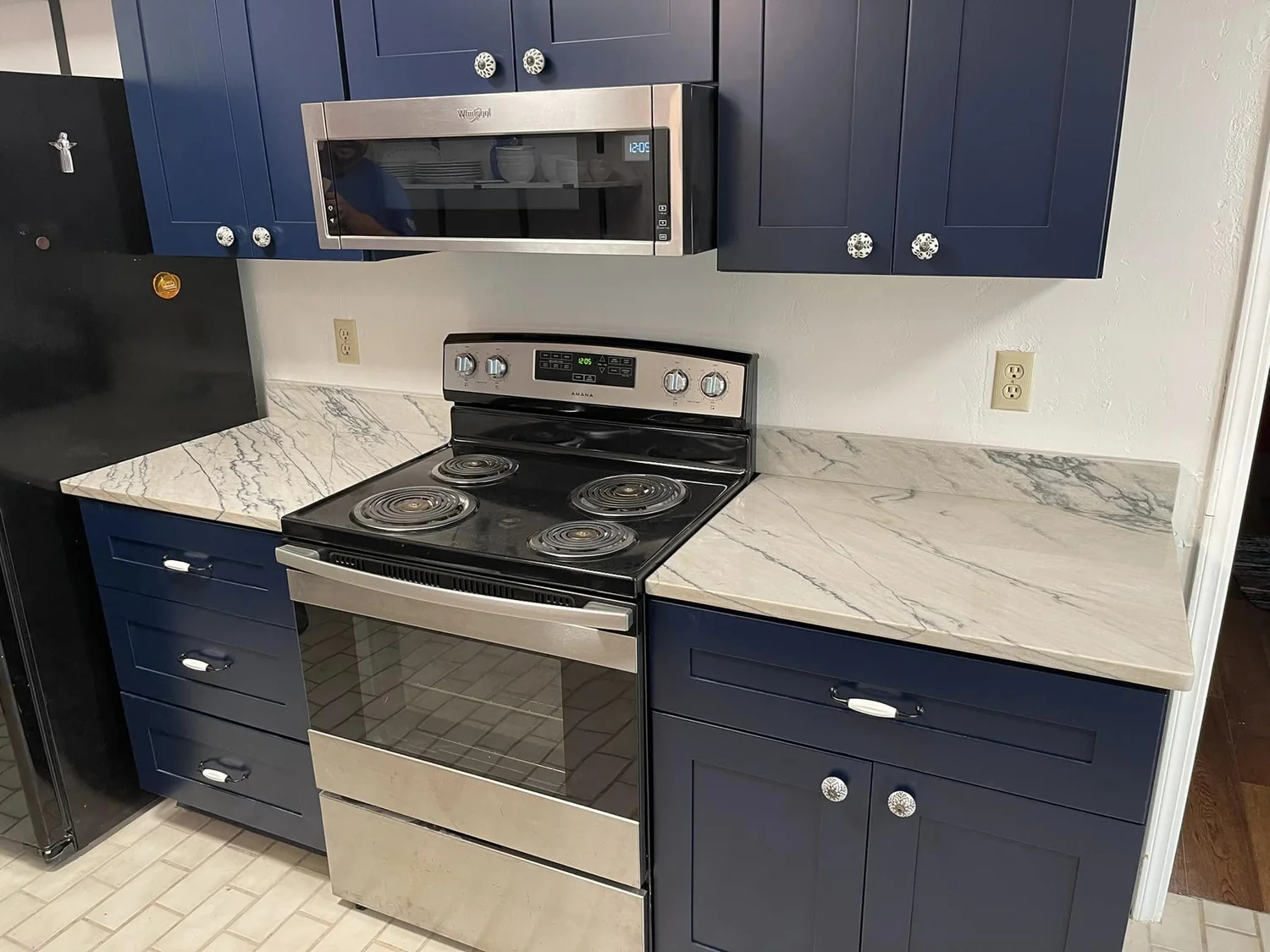
- Natural veining, frequently marble-like in white, grey and blue tones. Movement can shift noticeably across one slab.
- Marble
- Soft veining over a light field, with a distinctive cool, luminous look that engineered surfaces imitate but do not duplicate.
Everyday maintenanceWhat does living with it actually involve?
- Granite
- Wipe down with a stone-safe cleaner. Granite is porous, so periodic sealing is part of its care — how often depends on the stone.
- Quartz
- Non-porous, so sealing is not part of the routine. A stone-safe cleaner and a soft cloth is generally all it asks for.
- Quartzite
- Similar to granite: stone-safe cleaner plus periodic sealing. We will tell you what the slab you pick tends to need.
- Marble
- The most attentive of the four. Wipe spills promptly, use a stone-safe cleaner, and expect to seal it periodically.
Heat considerationsCan I set a hot pan on it?
- Granite
- Generally handles kitchen heat well, but we still recommend trivets — thermal shock can affect any stone surface.
- Quartz
- The resin binder is the limiting factor: use trivets and hot pads, and keep hot cookware off the surface.
- Quartzite
- Behaves broadly like granite for heat. Trivets are still the sensible habit.
- Marble
- Tolerates warmth, but heat is not its main concern — surface finish and acidic contact are. Use trivets anyway.
Stains & etchingWhat happens if something spills?
- Granite
- Sealed granite resists everyday spills reasonably well. Oil, wine and citrus left standing can still mark it — wipe them up.
- Quartz
- Non-porous, so most spills sit on the surface. Some pigments and harsh chemicals can still cause damage; clean promptly.
- Quartzite
- Sealed quartzite handles spills much like granite. Acidic spills deserve prompt attention on any natural stone.
- Marble
- Acids — lemon, vinegar, wine, some cleaners — can etch the surface, leaving a dull mark. Many owners accept this as patina.
Outdoor & lakeside useWill it work on a covered patio or lake deck?
- Granite
- The material we most often use for outdoor kitchens and bar tops around Grand Lake. Suitability still depends on the slab, the finish and the exposure — we will talk it through.
- Quartz
- Not our recommendation for direct sun. Resin-based surfaces can be affected by prolonged UV, and some manufacturers limit outdoor use.
- Quartzite
- Can work outdoors depending on the specific stone and finish. Bring us the application and we will look at candidates with you.
- Marble
- Possible in shaded or decorative outdoor settings, but weather and acidic rain change how it ages. Ask before committing.
Where we use it mostWhat projects does it suit?
- Granite
- Busy family kitchens, islands, outdoor kitchens, grill surrounds, bar tops, fireplace hearths and custom pieces.
- Quartz
- Kitchens where a uniform look matters, rental and second-home turnovers, bathroom vanities, laundry counters and commercial counters.
- Quartzite
- Statement islands and feature surfaces where someone wants a marble look with more everyday hardiness.
- Marble
- Bathroom vanities, fireplace surrounds, baking areas, tables and accent pieces where the look leads the decision.
Once you have narrowed it down
See how each material behaves in a real room
Every material page covers appearance, upkeep, where we use it and how to choose a slab — with photographs of installations we fabricated in our Grove shop.
FAQ
Material questions we answer every week
- Is granite or quartz better?
- Neither is better in the abstract. Granite is quarried, unique slab to slab, and benefits from periodic sealing. Quartz is engineered, consistent, and needs no sealing. How the room gets used decides it — and around Grand Lake, whether the surface is going outdoors often decides it for us.
- Is quartzite the same as quartz?
- No, and the names cause real confusion. Quartzite is natural stone, quarried like granite. Quartz is a manufactured surface. They are cared for differently and they look different in person.
- Which stone is best for an outdoor kitchen?
- We usually start with natural stone, most often granite, and choose the specific slab and finish for how exposed the surface will be. We do not recommend quartz in direct sun. Bring us the patio details and we will look at candidates with you.
- Will marble get ruined in a kitchen?
- Ruined, no — changed, likely. Marble can etch where something acidic sits on it, which leaves a dull mark rather than a stain. Some owners genuinely like the way it ages; others would rather not think about it. We will tell you honestly which camp a material suits.
- Can you help me decide if I still cannot?
- That is what the showroom is for. Bring your cabinet door and a photo of the room, and we will put candidates in front of you. Most people decide in minutes once they are looking at full slabs.
Next step
Still deciding? Come stand in front of the stone
Bring a cabinet door and a photo of the room. We will pull candidates in each material, talk through how they behave, and let you see them at full size before you commit to anything.