
Written by the Stone Restore Solutions team in Grove, Oklahoma. Published · last reviewed for accuracy .
The families of profile
Squared profiles read modern and architectural. A crisp top arris looks sharpest and is least forgiving at a busy corner; a lightly eased square softens that without changing the look.
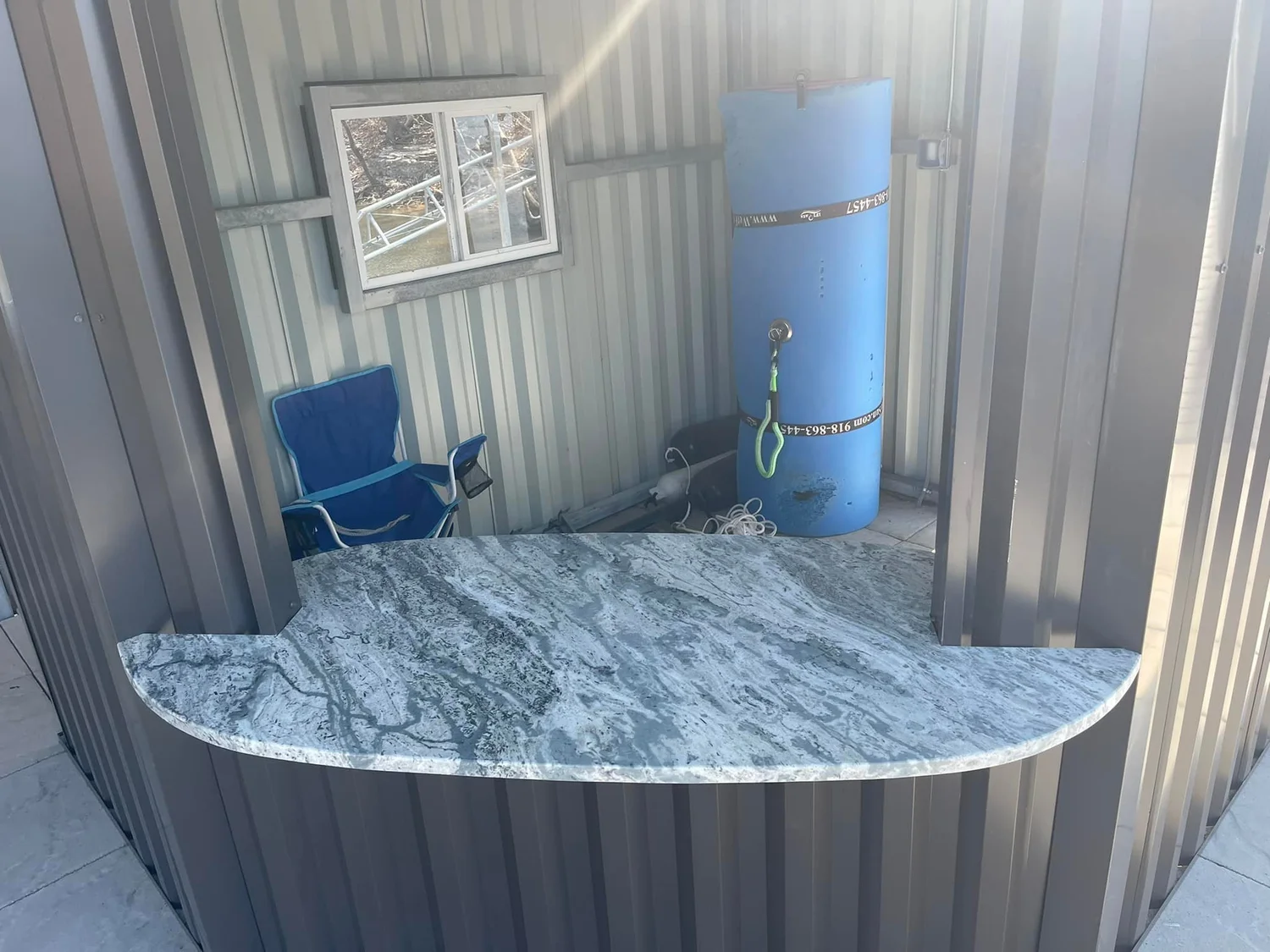
Rounded profiles remove the hard line entirely. They feel gentler against forearms at a bar or a desk height surface and are a common choice in bathrooms and family kitchens.
Shaped and stacked profiles carry more visual weight and more shadow, which suits traditional cabinetry and taller apron details. They also emphasise thickness, so they read heavier in a small room.
Match the edge to the room, not the trend
Look at the cabinet door profile and the hardware first. A slab edge with a lot of detail beside a flat-panel door tends to fight; a squared edge beside heavily moulded cabinetry can look unfinished.
Consider where hands and hips go. Perimeter runs, island seating and bar tops get touched constantly; a linen closet counter does not.
Material and thickness matter
Not every profile suits every material or thickness. Softer stones and thinner slabs limit how much detail an edge can hold, and some patterns look wrong when a profile cuts through them.
We look at this with the actual slab in front of us. That is also the point at which we can tell you what is practical for your piece.
How to decide at the showroom
Bring a cabinet door, a paint chip and a photo of the room. Run your hand along the finished samples — the tactile difference decides it for most people faster than the visual one.
If you are unsure, ask us to show the edge on the material you have chosen rather than on a display sample of a different stone.