
Written by the Stone Restore Solutions team in Grove, Oklahoma. Published · last reviewed for accuracy .
Sun and heat come first
Direct UV and sustained heat are the deciding factors. Natural stone generally handles both better than engineered quartz, whose resin content is the limiting factor, which is why granite is our common recommendation for a fully exposed outdoor counter.
How covered the space is changes the conversation. A roofed outdoor kitchen or screened porch opens up more options than an uncovered bar on a dock-facing deck.
Color matters more outside
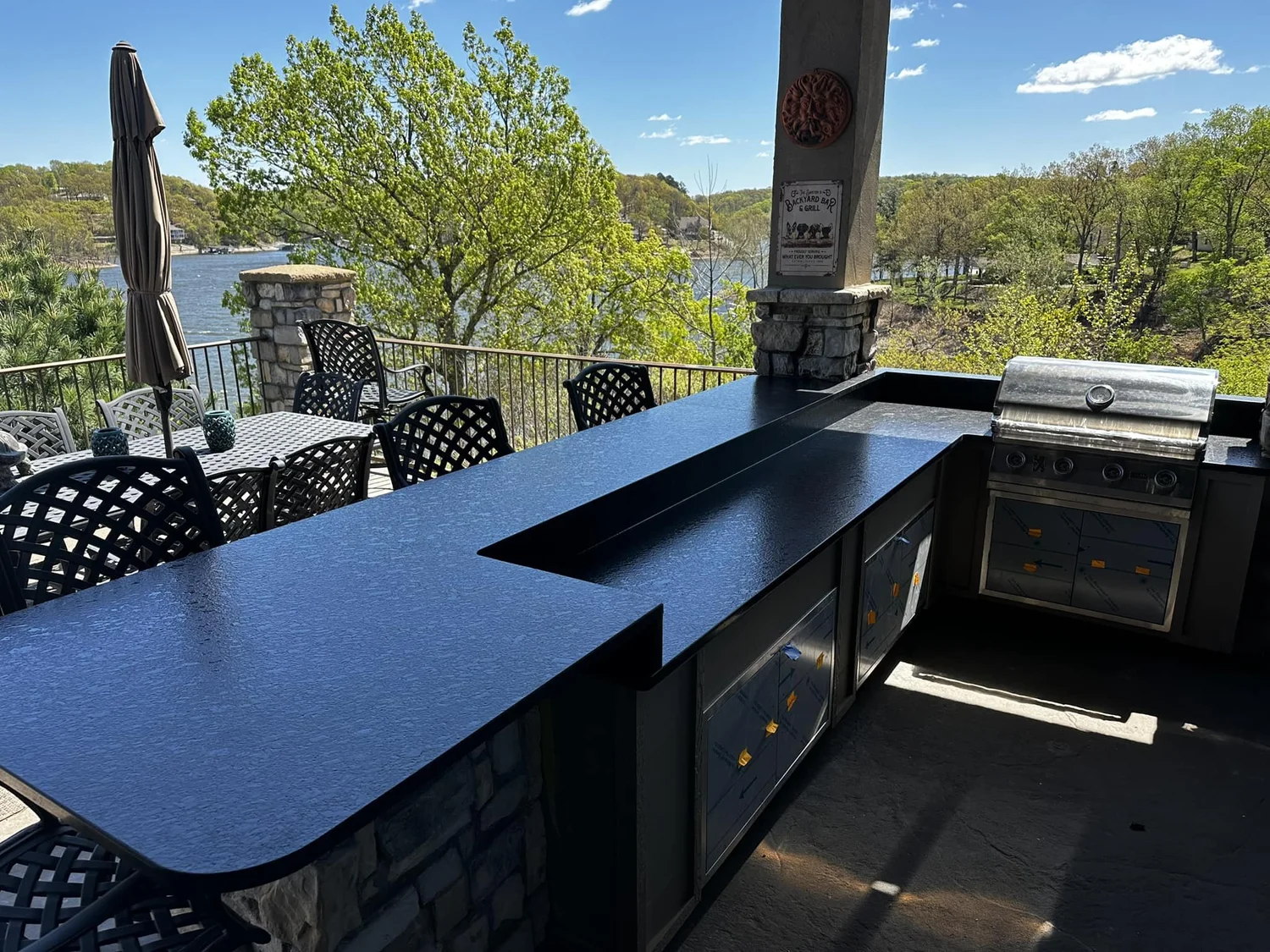
A dark surface in full Oklahoma sun gets hot enough to be unpleasant to lean on in July. If your outdoor kitchen faces the afternoon sun with no shade, a mid or light tone is more comfortable to use, and that is worth more than a slightly bolder slab.
Winter and water
Water that sits in a joint and freezes is what damages outdoor installations. Good drainage, a properly built base, and sealing where the material calls for it all matter more outdoors than in.
Tell us whether the counter will be blown out and covered for winter or left exposed; it affects what we recommend.
Design it for how you entertain
The practical details are what people remember: enough overhang for stools to tuck under comfortably, a landing area beside the grill so nobody sets a hot pan somewhere unfortunate, and space for the cooler or ice bin that inevitably appears.
Bar-height sections work well for lake views, and a stone bar top is a natural place to use a remnant slab if the run is short.
Build the enclosure first, then we template
Just like indoors, we template after the grill enclosure or base cabinetry is built and level. Bring us in early to talk about overhangs and support, though — the time to solve a 16-inch overhang is while the base is still being built.