
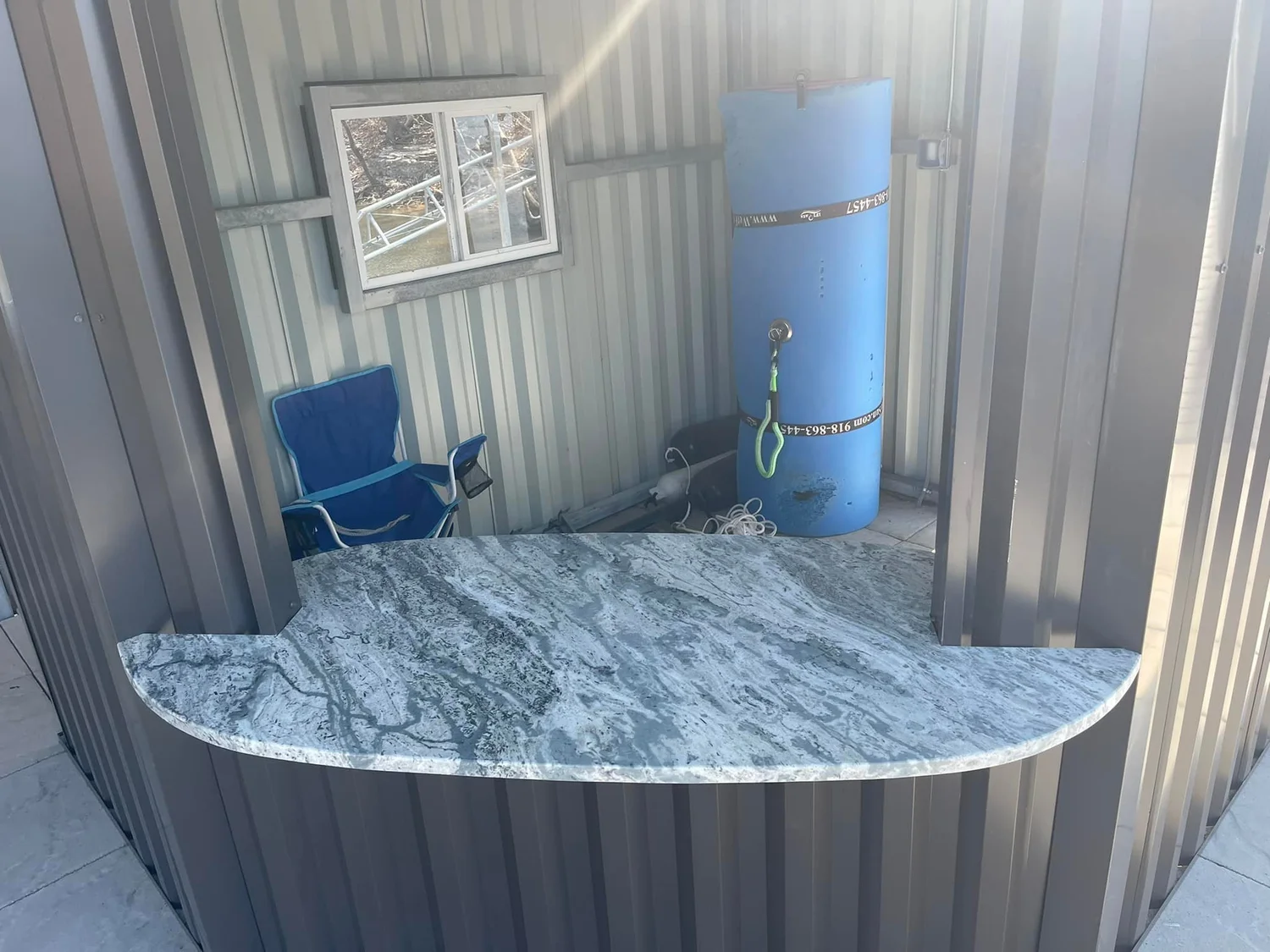
Written by the Stone Restore Solutions team in Grove, Oklahoma. Published · last reviewed for accuracy .
1. Showroom visit and slab selection
Bring a cabinet door or paint sample and rough dimensions if you have them. We will pull slabs, talk about edges, and be honest about how a given material will behave in your room.
Choosing early is genuinely better: it means we can hold the slab you loved rather than hoping something similar is available later.
2. Templating
Templating happens after cabinets or vanity bases are installed and level. We measure the real room, because walls are rarely square. Have your sink and faucet on site or know the exact models — cutouts are made to the specific sink.
This is also when we confirm overhangs, whether any support is needed underneath, and where a seam would fall if the layout requires one.
3. Fabrication at our shop
Your template is laid out on your slab so the pattern runs the way you saw it. Then cutting, edge profiling, cutouts for sinks and cooktops, and polishing — all at our shop on US-59 in Grove.
Because the work is done here rather than sent out, a question about a change is a phone call and a short drive rather than a delay.
4. Install day
Clear the countertops and the path from the door beforehand, and plan for the kitchen to be out of action for the day. The crew dry-fits, scribes where needed, sets, seams and finishes the stone, then walks the job with you.
A plumber typically reconnects the sink and faucet after we set the stone — often the same day or the next morning.
5. Living with it
We will tell you what your specific material wants: whether it needs sealing, how often, and which cleaner to use. We stock the DuPont StoneTech products we use in the shop, and we also handle scheduled maintenance if you would rather it be someone else's job.